
The Evolution of Simulated Experiences: A Journey Through Time
From arcade games to fully immersive, life-like simulations, the journey of simulated experiences has been nothing short of revolutionary. At Simraw, we take pride in offering some of the most advanced motion simulations available today. But to truly appreciate the thrill of modern PIT experiences, it’s important to understand how we got here.
Join us on a journey through time as we explore the evolution of simulated experiences—from their humble beginnings to the cutting-edge, adrenaline-pumping adventures of today.
1. The Beginnings: The Birth of Simulation
The concept of simulation dates back centuries, but it wasn’t until the 20th century that technology began to provide more accessible forms of virtual experiences. In the early days, simulations were primarily used for military training, engineering, and flight development. Early forms of simulations were limited to mechanical devices or flight simulators used by the military to train pilots.
The first breakthrough came in the 1950s with the development of the Link Trainer, the world’s first flight simulator. These rudimentary devices were designed to mimic the experience of flying, giving pilots the ability to practice crucial skills without leaving the ground. Though basic by today’s standards, the Link Trainer marked the beginning of a new era in training, entertainment, and technology.
2. The Arcade Era: Gamification and Fun on Screen
In the late 1970s and early 1980s, a new form of simulated entertainment began to take shape—arcade games. These games used interactive visual displays to immerse players in a virtual environment, and they quickly became a staple of pop culture.
One of the earliest successful arcade simulations was Asteroids (1979), where players navigated a spaceship through an asteroid field. These types of arcade experiences allowed players to interact with the game’s world through buttons and joysticks, making the experience more engaging. Meanwhile, classic driving simulators (such as Pole Position, released in 1982) were introduced, allowing players to sit in a real car-like seat and feel the thrill of racing without ever getting behind the wheel.
This era laid the foundation for more immersive and realistic experiences, as developers began exploring ways to make the games more interactive and dynamic.
3. The Rise of Virtual Reality: Immersion Takes Center Stage
Fast forward to the early 1990s, and virtual reality (VR) technology was introduced as the next big leap in simulated experiences. VR systems, like the Virtuality Group machines, used headsets and specialized controllers to create interactive, 3D worlds. Though the technology wasn’t fully refined, VR represented the promise of fully immersive simulations—places where users could not only interact with the environment but feel like they were actually inside the game.
While the VR experience of the ’90s was limited by bulky equipment and graphical constraints, the seeds were planted for future advancements. The idea of a completely immersive experience was now within reach.
4. The 2000s and Beyond: Realism and High-Tech Advancements
As the years went on, technology began to rapidly evolve. The 2000s marked a time when the line between gaming and real-world experiences began to blur, thanks to the arrival of motion-based technologies like the Nintendo Wii and PlayStation Move. These systems allowed players to physically interact with the games using motion sensors, making the experience feel more active and responsive.
At the same time, the development of 3D graphics and more powerful gaming consoles allowed for highly detailed environments. First-person shooters and racing simulators became even more realistic, allowing players to experience the thrill of combat or high-speed racing from the comfort of their own homes.
Then came the Oculus Rift (released in 2016), a major milestone for virtual reality. This portable, affordable VR headset was designed specifically for consumers, providing fully immersive environments with 360-degree visuals and head-tracking. With its introduction, VR technology took off, and simulated experiences became more realistic than ever before.
5. The Emergence of Motion Simulators: Real-World Thrills
As immersive technology continued to evolve, the next leap forward was the development of motion simulation technology. This technology takes the experience of VR and combines it with physical movement to create truly lifelike sensations. By integrating dynamic motion platforms with virtual environments, these simulators allow users to feel the rush of wind, the tilt of a plane, or the jolt of a car accelerating.
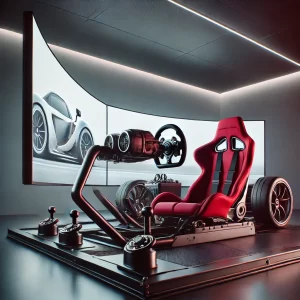
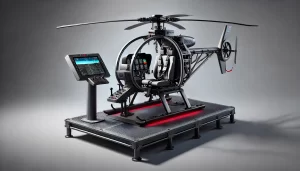
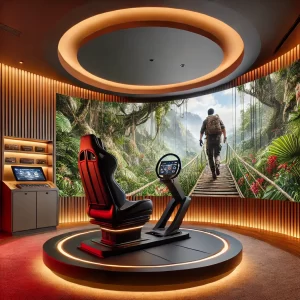
At Simraw, we harness the power of motion simulators to bring our PIT (Pure Immersive Thrill) experiences to life. Whether you’re flying through the sky in the Flight PIT, racing down a track in the Racer PIT, or exploring the deep jungles in the Adventure PIT, motion technology adds that extra layer of realism that truly makes you feel like you’re inside the experience.
These simulators use a combination of hydraulic, pneumatic, and electric systems to simulate real-world forces like G-forces, sudden movements, and changes in terrain. The integration of virtual reality and motion simulation has opened up a new era of realism and interactivity in entertainment.
6. The Future: The Next Frontier in Simulated Experiences
What does the future hold for simulated experiences? As technology continues to advance, we expect to see even more mind-blowing innovations in motion simulation and immersive entertainment. The next frontier includes:
- Full-Body Motion Capture: Imagine a simulation where every movement you make is replicated in real-time within the virtual environment. With advancements in full-body tracking technology, this kind of experience could soon be a reality.
- Augmented Reality (AR): While virtual reality immerses users in a completely simulated world, augmented reality allows for the blending of virtual elements with the real world. The integration of AR could lead to new, hybrid forms of motion simulation, where users can interact with both real and virtual environments simultaneously.
- Advanced AI-Driven Simulations: As artificial intelligence continues to evolve, we can expect simulations to become more adaptive, offering unique experiences based on a player’s behavior, preferences, and decision-making.
At Simraw, we’re constantly exploring these cutting-edge technologies to ensure that our PIT experiences are not just fun, but groundbreaking. We’re excited to bring you the next generation of motion simulations, with innovations that push the limits of what’s possible.
Conclusion: A Thrilling Ride Into the Future
From mechanical flight simulators to VR and motion-based thrill rides, the journey of simulated experiences has been an exciting evolution of technology, creativity, and innovation. At Simraw, we’re proud to be part of that journey, bringing you PIT (Pure Immersive Thrill) experiences that transport you into new worlds and let you feel the rush like never before.